
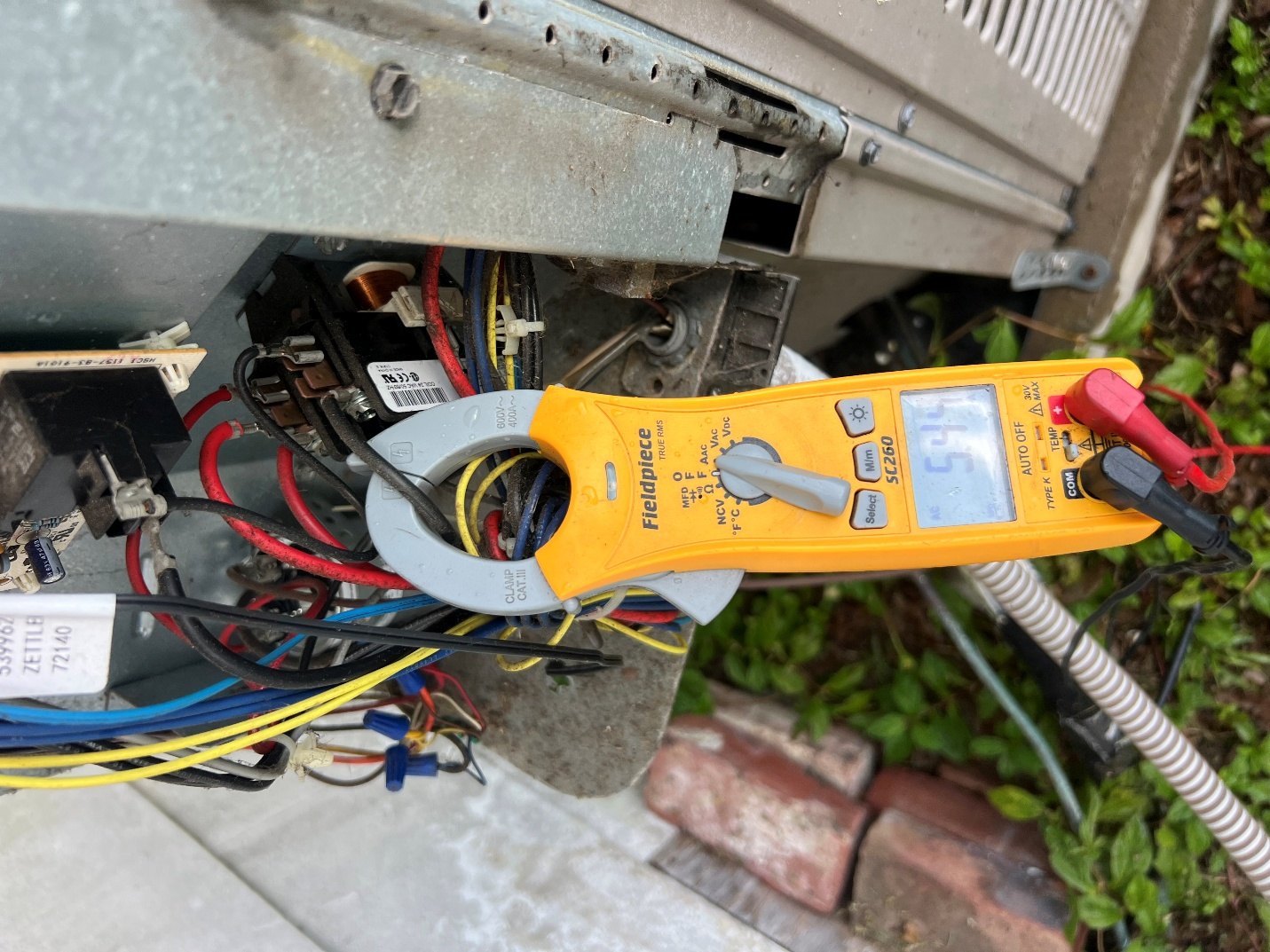
If your lights flicker when AC turns on, the cause may be a normal startup power draw. Air conditioners use a strong burst of electricity when the compressor starts, and your lights may briefly react to that demand. In some homes, pronounced or worsening flickering points to an AC component or electrical system problem.
Normal Compressor Startup Power Surge
An AC compressor draws more electricity at startup than it uses during normal operation. This short inrush current can create a brief voltage drop, causing nearby lights to dim or flicker for a fraction of a second.
A slight flicker that has always happened and disappears immediately may not call for air conditioning repairs. If the flicker becomes stronger, lasts longer, or appears with difficulty starting the AC, the system deserves closer inspection.
The AC Shares Electrical Capacity With Other Loads
An air conditioner places a heavy demand on the electrical system when its compressor starts. If lighting or other equipment competes for capacity at the same moment, the voltage drop can become more noticeable.
A dedicated AC circuit separates the cooling equipment from ordinary lighting loads. An electrician can determine if circuit design or loading contributes to the flicker.
Loose or Corroded Electrical Connections
Loose connections can cause unstable voltage when a large appliance starts drawing power. Problems may develop at the electrical panel, wiring terminals, AC equipment, or other points in the circuit.
A loose neutral can create flickering across several rooms rather than at one fixture. Buzzing, unusual heat, a burning odor, or worsening flicker calls for prompt attention from a licensed electrician.
Old or Undersized Home Wiring
Older or undersized wiring may struggle more with the sudden electrical demand of an AC compressor. Added resistance from aging, damaged, or corroded wiring can make voltage changes more noticeable when the unit starts.
This problem may become more apparent after a larger air conditioner or other high-demand equipment is added. An electrical inspection can identify wiring that no longer matches the property’s present load.
An Overloaded or Undersized Electrical Panel
Your electrical panel must handle the combined demand from the air conditioner, lighting, kitchen equipment, electronics, and other loads. If the panel operates close to capacity, AC startup can cause lights to dim more noticeably.
Widespread flickering, frequent breaker trips, or symptoms that grow worse may point to a larger electrical capacity issue. A licensed electrician can evaluate the service panel and determine what work is appropriate.
A Weak AC Start Capacitor or Start Relay
The start capacitor helps the compressor begin running without drawing excessive current for too long. When this component weakens, the compressor may struggle at startup and place a heavier load on the home’s electrical system.
Flickering that suddenly appears after years of normal operation can therefore come from the cooling equipment itself. A technician can test the capacitor and related components during an AC repair visit rather than guessing from the flicker alone.
A Compressor That is Struggling to Start
A worn or failing compressor may take more effort to start, increasing electrical demand at the moment the system turns on. You may notice stronger dimming along with clicking, delayed startup, short cycling, or unusual compressor noises.
This situation deserves an HVAC inspection because repeated hard starts can place added strain on cooling-system components. The technician can determine if the problem comes from startup hardware or the compressor itself.
Insufficient Electrical Supply to the Home
Sometimes the problem sits beyond the AC circuit. If the incoming electrical supply cannot comfortably handle large startup loads, voltage may dip when the compressor turns on and affect lights across the house.
Whole-home flickering is an important clue because it suggests a broader issue than one lamp or lighting circuit. An electrician can check the home’s electrical service and determine if the utility needs to examine the incoming supply.
When Flickering Deserves Prompt Attention
A tiny, split-second dim at AC startup can occur in a healthy system, but a changing pattern deserves attention. Strong dimming, repeated flickering, breaker trips, burning smells, buzzing, or trouble starting the compressor can point to an electrical fault or an AC problem.
For homeowners seeking AC repair in St. Petersburg, FL, the key is identifying which side of the system is responsible before replacing parts. An HVAC technician can diagnose capacitor, relay, compressor, and cooling-system faults, while an electrician should address household wiring, panel, or service problems.
Get Your AC Startup Problem Checked
If the flickering appears tied to your cooling equipment, Forest Air Conditioning & Heating Inc. can inspect your system and handle AC repair or maintenance based on what we find. Contact us to schedule an appointment so we can check the AC startup problem and help restore dependable cooling in your St. Petersburg home.
FAQs
Is it normal for lights to flicker when the AC turns on?
Brief, minor flickers can be normal because the AC compressor uses a large amount of electricity when it starts. This temporary demand can create a momentary voltage drop. If the flickering becomes stronger, lasts longer, or starts happening when it did not before, an HVAC or electrical inspection may be appropriate.
Can a bad AC capacitor cause lights to flicker?
Yes. A weakening start capacitor may make the compressor draw more electricity than usual while trying to start. This increased demand can produce more noticeable or prolonged light flickering. A technician can test the capacitor and determine if AC repair is needed.
Why do the lights flicker throughout the whole house when the AC starts?
Whole-house flickering can indicate a broader electrical issue rather than a problem with one light fixture. Possible causes include loose electrical connections, an overloaded panel, aging wiring, or insufficient incoming electrical capacity. A licensed electrician should evaluate widespread or worsening flickering.
When should I worry about lights flickering when my AC comes on?
Pay attention when the flickering lasts beyond the initial startup, becomes progressively stronger, or occurs with breaker trips, buzzing, crackling, warm outlets, or burning odors. Trouble starting the compressor can also point to an HVAC component problem that warrants professional inspection.