
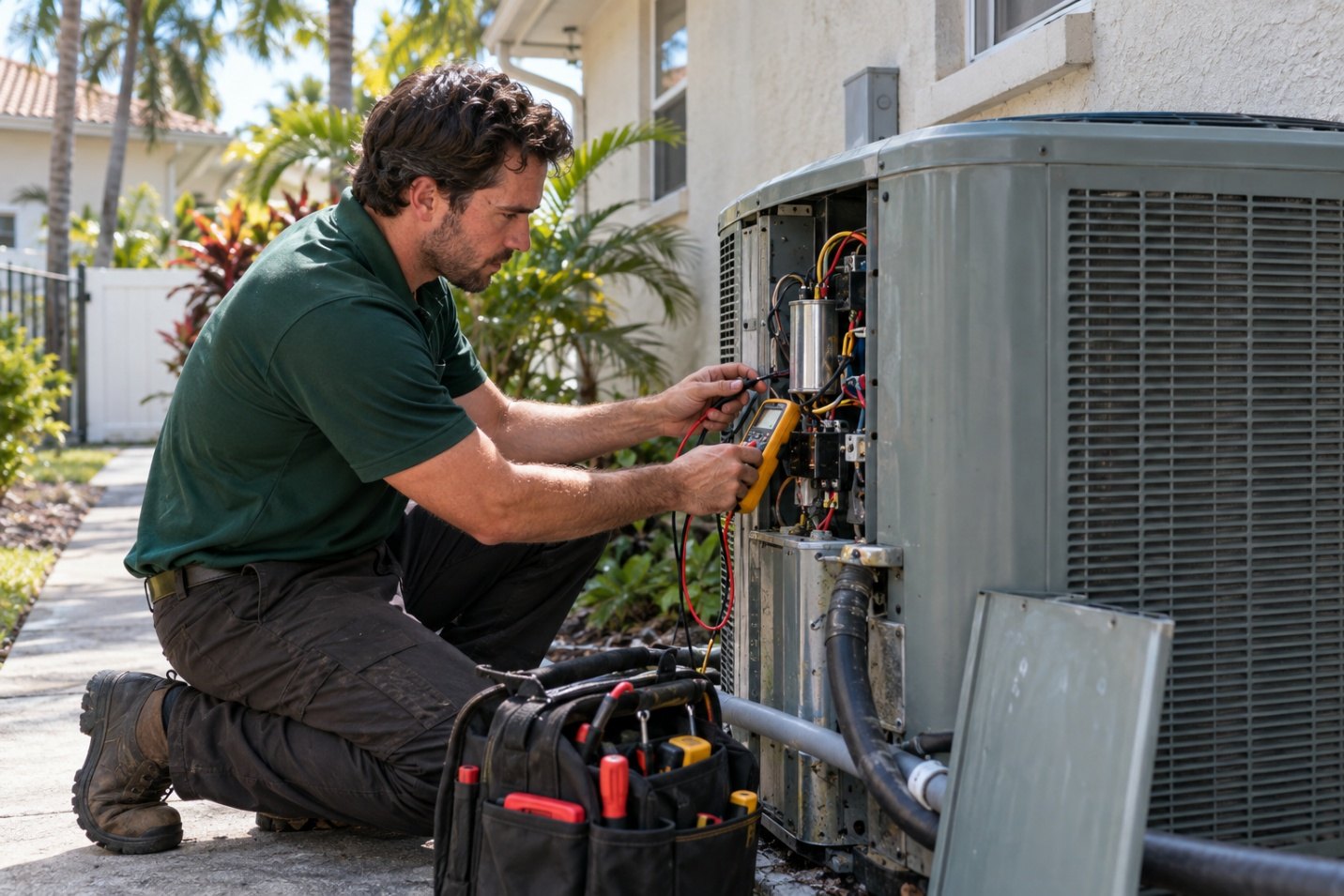
When your AC is not working and becomes the problem of the day, Clearwater heat can make your home uncomfortable fast. Many breakdowns begin with small issues that worsen under long cooling cycles, humidity, and heavy seasonal use. Knowing the common causes can help you spot trouble early.
A Dirty Air Filter Can Leave Your AC Not Working Properly
A clogged air filter restricts the air moving through your cooling system. The reduced airflow can make the unit run longer, cool less effectively, and place extra strain on the blower motor.
If the filter becomes heavily blocked, the evaporator coil may get too cold and freeze. This can weaken cooling further and may lead to the need for professional air conditioning repairs.
Low Refrigerant or a Refrigerant Leak Can Stop Cooling
Your air conditioner needs the correct refrigerant level to move heat out of your home. A leak can cause weak cooling, longer run times, hissing sounds, or ice around the indoor coil.
Refrigerant does not normally disappear through everyday operation. A technician should locate the leak before restoring the proper refrigerant level.
Thermostat Problems Can Keep the AC From Turning On
A thermostat with dead batteries, incorrect settings, a faulty sensor, or a wiring problem may fail to signal the cooling system. Check that it is set to cool and that the temperature setting is below the indoor temperature.
If the screen is blank or the system starts and stops at unusual times, the thermostat may need attention.
Electrical Problems Can Cause a Sudden AC Shutdown
Air conditioners depend on capacitors, contactors, wiring, and breakers. A failed part or tripped breaker can stop the system from starting, while damaged wiring may cause intermittent operation.
Clearwater storms can also strain electrical parts. If the breaker trips again after a reset, leave the system off and call an HVAC technician.
Frozen Evaporator Coils Can Block Proper Cooling
A frozen evaporator coil cannot absorb heat from indoor air correctly. You may notice warm air, weak airflow, visible ice, or water around the indoor unit as the ice melts.
Dirty filters, low refrigerant, and airflow restrictions can contribute to freezing. Turning the system off may thaw the ice, but the cause still needs attention.
A Clogged Condensate Drain Can Shut the System Down
Florida humidity creates condensation as your AC removes moisture from indoor air. Dirt, algae, and debris can collect inside the condensate drain line and stop water from draining.
Many systems have a safety switch that shuts the AC off when the drain pan fills. The blockage must be cleared before normal operation can resume.
A Failed Capacitor or Compressor Can Leave Your AC Not Working
The capacitor helps motors start and run, while the compressor moves refrigerant through the cooling system. If either part fails, the outdoor unit may hum, struggle to start, shut down, or stop cooling.
Compressor trouble can result from electrical faults, overheating, refrigerant problems, or age. Proper testing matters because several failures can create similar symptoms.
Fan Motor or Fan Blade Problems Can Reduce Airflow
Your system uses fans to move indoor air across the evaporator coil and release heat through the outdoor unit. A worn motor, damaged blade, loose connection, or debris around the fan can interrupt that process.
Rattling, squealing, humming, or weak airflow may appear before the fan stops. A failing fan can also strain other components.
Damaged Ductwork Can Make Cooling Seem Lost
Duct leaks, loose connections, crushed sections, and debris can keep conditioned air from reaching your rooms. The AC may still run, yet parts of your Clearwater home can remain warm or unusually humid.
If airflow is weak in only certain rooms, ductwork may be part of the problem. An inspection can identify sections that interfere with normal air delivery.
Skipped Maintenance Can Turn Small Problems Into Breakdowns
Routine maintenance allows filters, coils, electrical parts, drainage, refrigerant performance, and airflow to be checked before a minor defect becomes a shutdown. Regular inspections can catch wear that builds during Clearwater’s long cooling season.
If you are asking “why is my AC not working”, several causes may create the same symptom. Professional AC repair in Clearwater, FL can identify the actual fault instead of relying on guesswork.
Know When Your Clearwater AC Needs Professional Attention
A system that will not start, blows warm air, leaks water, freezes repeatedly, or makes unusual noises should not be ignored. Prompt air conditioning repairs can address the source before continued operation puts more strain on costly components.
Get Your Clearwater AC Working Again
At Forest Air Conditioning & Heating Inc., our certified technicians handle AC repair and maintenance with quality, on-time service at a fair price. Call us or schedule an appointment for service weekdays, weekends and holidays when your AC stops working and you need dependable cooling restored.
FAQs
Why is my AC running but not cooling my Clearwater home?
Your AC may run without cooling because of a dirty air filter, low refrigerant, frozen evaporator coil, dirty condenser, or compressor problem. Restricted airflow can also prevent enough cooled air from reaching your rooms. Forest Air recommends professional attention when basic thermostat and filter checks do not solve the problem.
What should I check first when my AC is not working?
Start by checking the thermostat settings, air filter, and circuit breaker. Make sure the thermostat is set to cooling and the breaker has not tripped. If the system still does not start, a capacitor, thermostat, wiring issue, or another electrical component may need professional diagnosis.
Can a dirty air filter cause my AC to stop working?
Yes. A heavily clogged filter restricts airflow and can reduce cooling performance. Poor airflow may also contribute to frozen evaporator coils, which can eventually interfere with normal AC operation.
When should I call for AC repair in Clearwater, FL?
Call for professional AC repair when the system will not start, blows warm air, has weak airflow, freezes repeatedly, makes unusual noises, or keeps shutting down. These symptoms can point to refrigerant, electrical, airflow, compressor, or other mechanical problems that require proper testing.
Can regular maintenance help prevent AC breakdowns?
Regular AC maintenance can identify dirty components, airflow problems, and developing mechanical issues before they lead to larger failures. Forest Air recommends routine professional maintenance to keep the system operating properly through Florida’s demanding cooling season.