
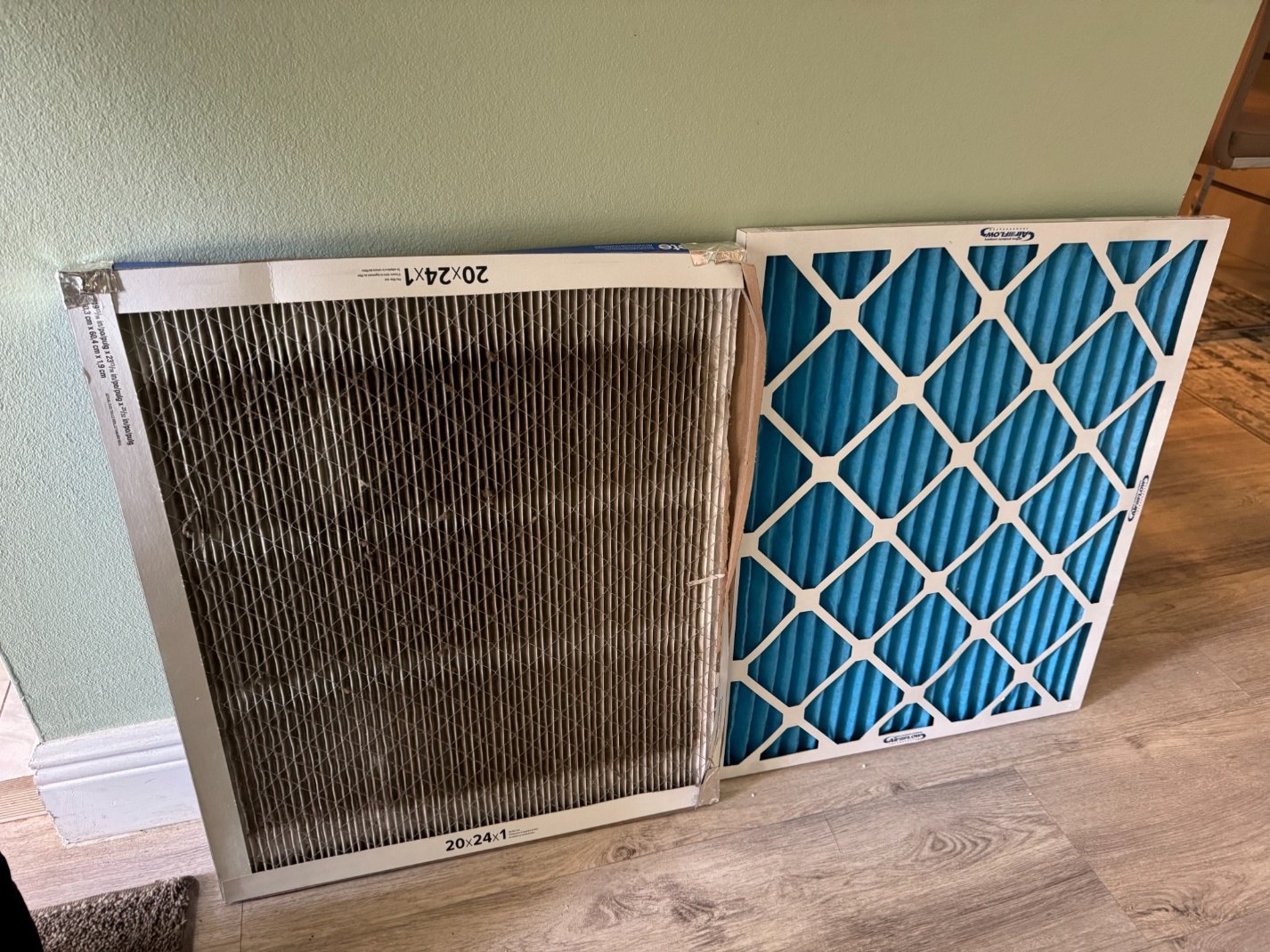
Clearwater homeowners depend on air conditioning for much of the year, so clean filters matter for steady airflow and indoor comfort. If you are asking how often you should change your air filter, a practical starting point is every 30 to 45 days during heavy cooling periods. The appropriate schedule depends on the filter type, pets, allergies, household activity, and how often your AC runs. Regular replacement is important for maintaining airflow and protecting system performance.
How Often Should You Change Your Air Filter in Clearwater?
Most Clearwater homeowners should inspect their HVAC filter once a month and replace it about every 30 to 45 days during hot weather. Some homes with lighter AC use and fewer airborne particles may reach 60 days, but the filter itself should guide the timing.
A heavily clogged filter restricts airflow and forces the system to work harder. If airflow becomes poor enough, the evaporator coil may freeze or cooling may fail, sometimes leading to an emergency HVAC service call.
Clearwater’s long cooling season means filters collect dust, pollen, pet dander, and other particles for many hours each day. Monthly checks make it easier to replace a dirty filter before comfort or system performance starts to suffer.
Why Clearwater Weather Can Shorten Filter Life
High temperatures keep air conditioners running for long stretches, especially from late spring through early fall. More runtime means more air passes through the filter and more debris collects on its surface.
Humidity also matters because Clearwater homes often rely on the AC system to manage both heat and moisture. A filter that might last longer in a mild, dry climate can become dirty much sooner under Florida conditions.
Seasonal pollen can add to the buildup. Homes near trees, landscaping, busy roads, or construction may find that filters need attention sooner than the package suggests.
Filter Type Changes the Replacement Schedule
Basic fiberglass filters usually need replacement about every 30 days. They have less surface area for capturing particles and often fill faster than pleated options.
One-inch pleated filters may last 60 to 90 days in moderate conditions, but Clearwater’s cooling demand can shorten that interval. Homeowners should still inspect them monthly instead of relying only on the printed lifespan.
Thicker high-efficiency filters can last several months when the HVAC system is built to use them. Before choosing a higher MERV rating, check the equipment requirements so the filter does not create too much airflow resistance.
When Should You Replace a Filter More Often?
Homes with pets should inspect filters about every three to four weeks. Hair and dander can build up quickly when pets spend most of their time indoors.
People with allergies may also want more frequent checks, particularly during high-pollen periods. A cleaner filter can reduce the amount of dust, pollen, and other particles circulating through the home.
Renovation work, nearby construction, frequent door opening, and a busy household can shorten filter life as well. If the filter looks gray or packed with debris before its normal change date, replace it early.
Signs Your Air Filter Is Ready for a Change
Weak airflow from supply vents is one common warning sign. You may also notice more dust on furniture, longer cooling cycles, uneven comfort, or a musty smell coming from the vents.
A quick visual check can tell you plenty. If the filter is dark, visibly coated, or blocks most light when held up, it is time to install a fresh one.
Do not wait for the calendar if cooling performance starts to drop. Changing a dirty filter is one of the simplest maintenance steps you can take before an AC repair becomes necessary.
Make Filter Checks Part of Regular HVAC Care
Set a monthly reminder during Clearwater’s hottest months and keep a spare filter nearby. This habit makes it easier to act as soon as you notice heavy buildup.
Filter changes also pair well with professional air conditioning services, including routine AC maintenance and system inspections. A technician can examine airflow, coils, drain lines, electrical parts, and other components that affect system operation.
Good filter habits matter outside cooling season too. Clean airflow also benefits the system when you use heating services during Clearwater’s cooler days.
A Simple Schedule for Clearwater Homeowners
For many Clearwater homes, changing the filter every 30 to 45 days during heavy AC use is a sensible baseline. If you have asked “how often should I change my air filter,” monthly inspections will give you a better answer than relying on a fixed calendar alone.
Schedule HVAC Care With Forest Air Conditioning & Heating Inc.
Forest Air Conditioning & Heating Inc. provides AC maintenance, repair, and installation for homeowners throughout Clearwater and Pinellas County. Contact us to schedule an appointment with one of our certified technicians and help keep your AC operating with dependable airflow and consistent comfort.
FAQs
How often should you change your air filter in Clearwater, FL?
Many Clearwater homeowners should replace their HVAC air filter every 30 to 45 days during periods of frequent cooling. Check the filter monthly because household conditions and AC runtime can make it dirty sooner.
Should I change my HVAC filter more often if I have pets?
Yes. Pet hair and dander can cause an HVAC filter to collect debris faster, especially in homes with multiple pets. Check the filter every few weeks and replace it when buildup becomes visible or airflow begins to weaken.
Can a dirty air filter make my AC work harder?
Yes. A clogged filter restricts airflow through the HVAC system, which can reduce system performance and increase energy use. Waiting too long to replace a dirty filter can also contribute to cooling problems.
Does the type of HVAC filter affect how often it should be changed?
Yes. Basic fiberglass filters generally need replacement sooner than thicker pleated or high-efficiency filters. Even when a filter has a longer rated lifespan, Clearwater homeowners should inspect it monthly because heavy AC use can shorten its useful life.